
Protecting What Matters: County Executive Candidates on Conservation and Growth
Scenic Rivers asked the questions. Read the candidates full responses on land use, development, and the future of Anne Arundel County’s forests, farms, wetlands, and natural areas.
Scenic Rivers Land Trust invited all candidates running for County Executive in Anne Arundel County in the 2026 election to respond to five questions, providing an opportunity to share their perspectives and administrative priorities related to land conservation and land use in Anne Arundel County ahead of the upcoming primary election.
All candidates were invited to submit responses by June 1. As additional responses are received, this page will be updated to include their answers. Early voting for the Anne Arundel County primary election begins on June 11 and runs through June 18. Primary Election Day is June 23.
As a 501(c)(3) nonprofit organization, Scenic Rivers Land Trust does not endorse candidates for elected office. We look forward to working with the next County Executive to conserve the special forests, farms, wetlands, and natural areas that sustain Anne Arundel County.
CANDIDATE: Dave Crawford, Republican
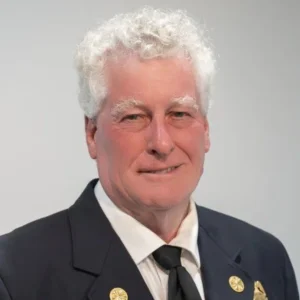
Dave Crawford
QUESTION: Despite enacting a stricter Forest Conservation Law in 2019, Anne Arundel County continues to lose forest cover and experience significant development pressure. What specific policies or priorities would your administration pursue to protect remaining forests, farms, wetlands, and other environmentally sensitive lands? How do you plan to approach meeting county and state 2030 and 2040 land conservation goals?
RESPONSE:
Anne Arundel County’s forests, farms, and wetlands are irreplaceable assets—once lost to development, they cannot be recovered. My administration will pursue a multi-pronged approach rooted in our existing Green Infrastructure Master Plan, adding the urgency, accountability, and funding focus that has been missing.
Accelerate the Green Infrastructure Master Plan: I will fast-track land acquisition, conservation easements, and strategic partnerships with the Maryland Environmental Trust and the Chesapeake Bay Trust to achieve the goal of conserving 5,000 additional acres of open space by 2030.
Strengthen Forest Conservation Law Enforcement: I will improve permitting review processes and ensure developers cannot circumvent reforestation requirements through weak mitigation, prioritizing no-net-loss outcomes and meaningful on-site or in-watershed reforestation.
Replant Anne Arundel 2.0: I will launch an expanded community reforestation initiative targeting 100,000 native trees within four years to rebuild urban and rural tree canopy, reduce stormwater runoff, and improve habitat connectivity.
No Net Loss Wetlands Policy: My administration will require that any wetland acreage disturbed by development be replaced at a minimum 2:1 ratio within the same watershed—protecting the water filtration and flood mitigation functions our wetlands provide.
2030/2040 Goals: I will establish measurable annual benchmarks, report publicly on progress, and align county land acquisition strategies with state Program Open Space funding to leverage every available dollar. Results—not reports—will define success.
QUESTION: As Anne Arundel County grows, land use decisions will shape everything from housing and transportation to water quality, flooding resilience, and habitat conservation. What principles and policies would guide your administration’s approach to managing growth and protecting the county’s natural resources?
RESPONSE:
Growth management must balance the legitimate needs of a growing population with the ecological and community values that make Anne Arundel County exceptional. My administration’s approach will be guided by Smart Growth, Fiscal Responsibility, and Environmental Accountability.
Smart Growth First: I will incentivize redevelopment of existing commercial and underutilized urban sites over greenfield development, reducing impervious surface expansion and preserving remaining forests, wetlands, and farmland.
Net-Zero Stormwater Standards: I will require developers to demonstrate net-zero impact on stormwater runoff volume and water quality before receiving permits. Low Impact Development (LID) techniques and green infrastructure will be conditions of permitting, not optional add-ons.
Environmental Impact Assessments: My administration will require EIAs for all major development projects exceeding 50 acres, with public comment periods and independent technical review—ensuring cumulative watershed impacts are considered.
Flood Risk Integration: All county land use and zoning decisions will incorporate current sea level rise projections and flood risk data. With sea levels projected to rise up to 5.35 feet by 2100 and 1,850 miles of county roads already at risk, every major land use decision must account for long-term resilience.
The bottom line: growth should make our county better, not degrade the natural systems that sustain our quality of life and property values.
QUESTION: Conservation organizations and local governments often rely on tools such as conservation easements, land acquisition funding, forest conservation requirements, and restoration incentives. Are there particular policies, funding mechanisms, or programs you would strengthen, reform, or expand as County Executive?
RESPONSE:
Conservation tools work—but they require sustained funding, strong enforcement, and genuine commitment from county leadership. My administration will prioritize:
Conservation Easements: I will work with Scenic Rivers Land Trust, the Maryland Environmental Trust, and the Chesapeake Bay Trust to accelerate easement activity on priority parcels—farms, forested properties, and riparian buffers at risk of development.
Federal and State Funding Pursuit: I will aggressively pursue Program Open Space, USDA RCPP
grants, and LWCF (Land and Water Conservation Fund) federal dollars. No available funding
source will go unpursued.
Forest Conservation Law Reform: I will close loopholes that allow weak offsite mitigation and increase staffing and resources for compliance monitoring.
Bay Restoration Fund Expansion: I will streamline the application process and increase outreach to the estimated 83,000 properties in Anne Arundel County still using conventional septic systems—directly reducing nitrogen loading in critical watersheds.
Restoration Program Investment: I will expand the Watershed Stewards Academy and Backyard Buffers programs with increased county funding, engaging homeowners, faith communities, and businesses in conservation landscaping.
90-Day Efficiency Audit: Within the first 90 days, I will audit existing environmental programs
to eliminate redundancy and redirect savings to front-line restoration work.
QUESTION: Public access to nature and protected open space remains uneven across Anne Arundel County, particularly in more urbanized communities. What role do you believe county government should play in expanding equitable access to parks, trails, forests, and waterways?
RESPONSE:
Every resident of Anne Arundel County—regardless of zip code or income—deserves meaningful access to parks, trails, forests, and waterways. County government has a responsibility to ensure that access is equitable across all communities.
Equity-Focused Land Acquisition: When acquiring new open space, I will prioritize parcels in underserved and urbanized communities where residents currently have the least access to nature—closing the greenspace gap rather than simply adding acreage in already-protected corridors.
Trail Connectivity: I will invest in completing and connecting the trail network in underserved areas, linking trails to transit stops and neighborhood centers to expand access without requiring a car or private boat.
Waterfront and Public Landing Access: I will invest in waterfront infrastructure improvements at public landings and working waterfront sites, ensuring Bay access is not limited to those with private docks.
Environmental Education: I will partner with Anne Arundel County Public Schools to expand environmental education programs and launch a county-wide student water quality monitoring network—connecting young people in every neighborhood to the county’s natural resources.
Community Stewardship: The ‘Anne Arundel Environmental Stewards’; volunteer program I will launch—targeting 5,000 residents—will be intentionally structured to include participants from every community and council district.
QUESTION: Scenic Rivers frequently partners with Anne Arundel County agencies and municipalities on conservation, stewardship, and restoration projects. How would your administration work with nonprofit and community partners to advance environmental and resilience goals?
RESPONSE:
Nonprofit and community organizations like Scenic Rivers Land Trust are force multipliers for county government—bringing expertise, community trust, volunteer capacity, and private funding that government alone cannot access. My administration will treat these partnerships as essential infrastructure.
Formal County Environmental Partnership Program: I will establish a formal program providing streamlined contracting, multi-year funding commitments where appropriate, and clear communication channels between county agencies and nonprofit partners—giving organizations like Scenic Rivers reliable, efficient access to county support.
Shared Data and Planning: My administration will share county environmental data, GIS mapping, and capital planning information with nonprofit partners to enable better coordinated conservation targeting. When Scenic Rivers knows where the county is planning acquisitions or easements, they can align their resources accordingly.
Quarterly Environmental Town Halls: I will establish quarterly town halls in each council district—giving residents, nonprofits, and businesses a direct voice in environmental priorities and holding county government accountable for measurable progress.
Grant Co-Applications: Many federal and state grants require or reward local match contributions from nonprofits. My administration will actively partner with nonprofits to co-apply for grants, maximizing the county’s total environmental investment without increasing taxes.
I have spent my career in service to this community as a volunteer firefighter and community leader. The most durable environmental progress happens when government and community partners work together—and I will build an administration that reflects that belief.
CANDIDATE: James Kitchin, Democrat

James Kitchin
QUESTION: Despite enacting a stricter Forest Conservation Law in 2019, Anne Arundel County continues to lose forest cover and experience significant development pressure. What specific policies or priorities would your administration pursue to protect remaining forests, farms, wetlands, and other environmentally sensitive lands? How do you plan to approach meeting county and state 2030 and 2040 land conservation goals?
RESPONSE:
Too often, our public officials compromise between what we know our residents want, what we know our environment needs, and what developers are willing to give us. I don’t subscribe to doing politics that way and am eager to reengage on forest conservation to get us to where we know we need to be. This is why I’m using the public financing system and am taking no special interest money at all.
A priority of mine is to create a permanent funding source for land conservation. We need to have increased and consistent funding so that we can reach our land preservation goals. Apart from a strong commitment to funding, I will pursue the following specific policies.
I will pursue a true no-net-loss of forest policy, and will get it done. We will play with all of the levers: higher conservation thresholds, stronger afforestation requirements, robust reforestation, and an effective fee-in-lieu in order to push development away from our forests and to achieve no-net-loss.
I will work to reverse the decision of the current County Council to move from net density to gross density when calculating the number of buildable units allowed on a piece of land. Common practice is to net out sensitive environmental features when calculating density. So if a 10 acre lot in an R1 zoned area had 5 acres of wetlands on it then the land owner would have a right to build 5 houses. This is how it had always been done in Anne Arundel until this past July. Now, that same lot with 5 acres of wetlands on it has a right to build 10 houses. Even if they can’t touch the wetlands or the buffers it directly increases the value of the land (in direct proportion to the amount of environmentally sensitive area). This current policy will ensure more building right next to our most environmentally sensitive land and makes it more expensive to conserve land through easements. This policy has to be reversed.
The best way to preserve farmland is to make farming economically viable, and the biggest barrier to new farmers entering the industry is the price of land. We will expand on the successful model of Rock Hold Creek Farm, where the county owns the land and leases it to an agricultural operator. This is a multipurpose strategy: it supports the agricultural economy, increases the supply of fresh, local food in the county, and permanently preserves open space against sprawl.
We also need to adjust our Agriculture and Woodlands Preservation program, which purchases conservation easements from county landowners. Right now, the minimum lot-size for participation in that program is 50 acres – this needs to be lowered so that more parcels and parcels from all parts of the county can participate. We should also explore increasing the percentage of the fair market value that these programs offer property owners for the easement. Currently the county program only offers 60%, compared to the 75% offered by a similar program at the state level.
We should be creative in how we use the tax-sale process to preserve land. Historically, speculative developers have used the tax sale to buy environmentally sensitive land at a reduced rate and try to build. The county should be proactively looking at properties that are up for tax sale, identify those that are prime for preservation, and purchase them at a reduced rate. We would need to include adequate safeguards so that this process doesn’t inadvertently disenfranchise vulnerable communities.
Lastly, I want to highlight that land needs to be preserved in all parts of our county. While most land conservation efforts focus on protecting our largest remaining natural spaces – often located in rural areas – we must also invest in conservation and the greening of our urban centers. We must invest in pocket parks and small, neighborhood green spaces so that residents in every corner of our county can enjoy nature.
QUESTION: As Anne Arundel County grows, land use decisions will shape everything from housing and transportation to water quality, flooding resilience, and habitat conservation. What principles and policies would guide your administration’s approach to managing growth and protecting the county’s natural resources?
RESPONSE:
My two north stars when it comes to land use decisions and policy are environmental conservation and affordable housing. Guiding principles and policies will be no-net-loss of forest, better stormwater management, pushing building away from environmentally sensitive lands, and a laser focus on building the type of housing that our residents need. These are often pitted against each other, but it doesn’t have to be that way. We can do both, and my administration will.
We need to be laser focused on building affordable housing – not just more housing. I don’t subscribe to a supply side, trickle down approach (Housing Filtering) because that never works well for working families.
Some of the specific tools we will use include:
● Providing concierge service for affordable housing projects.
● Setting up a one-stop shop for information on the types of affordable housing you can build here.
● Identifying county-owned properties that could be provided at a reduced rate to build housing on.
● Using the county’s bonding authority to create a larger pool of capital we can use to finance affordable housing projects.
● Utilizing community land trusts to create permanent affordable housing and protect communities against gentrification.
● Incentivizing the building of accessory dwelling units. This can be done through creating preapproved plans as well as providing financial incentives.
● Protecting tenants by outlawing price gouging for rental units.
At the same time, we will ensure that we are achieving a no-net-loss of forests, conserving more land, pushing the development that happens away from our most environmentally sensitive areas, and addressing our stormwater runoff needs. In order to do this, we can’t take a one-size-fits-all approach to development policies. Recent legislation passed by this County Council changed the bulk building regulations to allow for a larger percent of a lot to be paved over with impervious surfaces. This could make sense in town centers or critical corridors where we are trying to concentrate development – but it absolutely doesn’t make sense on our peninsulas or in our green infrastructure network.
QUESTION: Conservation organizations and local governments often rely on tools such as conservation easements, land acquisition funding, forest conservation requirements, and restoration incentives. Are there particular policies, funding mechanisms, or programs you would strengthen, reform, or expand as County Executive?
RESPONSE:
Absolutely. As mentioned above, I want to strengthen our forest conservation program to get to a no-net-loss, rework our agriculture and woodland preservation program to make it a more effective conservation tool, reverse the move to using gross density calculation (which will make it cheaper to purchase conservation easements), and be creative about using the tax-sale program as a mechanism to preserve environmentally sensitive land.
I also believe that we must remain committed to our restoration work, and that we need to create a much stronger urban tree planting initiative in our county.
I am committed to establishing a permanent, local funding source for land conservation. Ideally, we will go to the state and ask for authority to implement a progressive property tax. This would allow us to put a small surcharge on the most expensive homes and properties (those over several million dollars) and use that to fund land conservation.
QUESTION: Public access to nature and protected open space remains uneven across Anne Arundel County, particularly in more urbanized communities. What role do you believe county government should play in expanding equitable access to parks, trails, forests, and waterways?
RESPONSE:
The county government has a central role to play in this. When we preserve land, we must be committed to it being open to the public in a way that is sustainable both to the land and to the surrounding communities. That can only occur through robust community engagement in which our communities have a real seat at the table. But public access to public lands – whether our forests or our shorelines – must be increased. As more people experience the joy of being in nature they become more committed to voting for politicians and policies that further environmental conservation.
QUESTION: Scenic Rivers frequently partners with Anne Arundel County agencies and municipalities on conservation, stewardship, and restoration projects. How would your administration work with nonprofit and community partners to advance environmental and resilience goals?
RESPONSE:
Anne Arundel County has a wealth of knowledge and expertise in our non-profit communities, and one of the things we need to do is figure out how to best partner with and leverage the expertise of these groups.
I am committed to having quarterly meetings with the Scenic Rivers Land Trust and other like-minded groups to have consistent communication on environmental issues and make sure that we are all coordinating well together.
I am also committed to creating a position in the Resilience Authority specifically to help coordinate with non-profits and communities. I am confident that together we will be able to accomplish a lot over the next four years.
CANDIDATE: Allison Pickard, Democrat
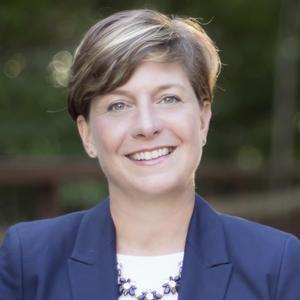
Allison Pickard
QUESTION: Despite enacting a stricter Forest Conservation Law in 2019, Anne Arundel County continues to lose forest cover and experience significant development pressure. What specific policies or priorities would your administration pursue to protect remaining forests, farms, wetlands, and other environmentally sensitive lands? How do you plan to approach meeting county and state 2030 and 2040 land conservation goals?
RESPONSE:
The 2025 State of the Forest report demonstrates that Anne Arundel County’s strengthened conservation policies—including the 2019 Forest Conservation Law and enhanced mitigation requirements—are making a difference. We have significantly reduced the rate of forest loss through stronger protections, conservation efforts, and mitigation strategies. That progress shows that when we set clear environmental priorities and hold ourselves accountable, we can achieve meaningful results.
At the same time, there is more work to do. Our goal should be no net loss of forest, and reaching that goal will require a renewed focus on reforestation and afforestation across the county.
My administration would prioritize expanding reforestation efforts on public lands, partnering with private landowners to plant and maintain new forests, restoring riparian buffers and stream corridors, and targeting tree planting in communities where canopy coverage is limited. We will continue protecting existing forests while also increasing the pace and scale of reforestation so that we are adding forest cover, not just slowing its loss.
Meeting county and state 2030 and 2040 conservation goals will require a balanced approach: protecting remaining forests, farms, wetlands, and environmentally sensitive lands while investing in the reforestation and restoration projects needed to grow our natural resource base for future generations. We will continue leveraging county, state, federal, and nonprofit partnerships to maximize conservation funding, expand easement programs, and ensure that progress is measured transparently through the State of the Forest reporting process.
The challenge before us is not simply preventing loss—it is building back. By combining strong conservation policies with aggressive reforestation and restoration efforts, Anne Arundel County can continue reducing forest loss and move steadily toward our long-term no-net-loss and land conservation goals.
QUESTION: As Anne Arundel County grows, land use decisions will shape everything from housing and transportation to water quality, flooding resilience, and habitat conservation. What principles and policies would guide your administration’s approach to managing growth and protecting the county’s natural resources?
RESPONSE:
My administration would be guided by the core principles of Anne Arundel County’s Plan2040: creating a county that is green, smart, and equitable. We would manage growth by directing new development and redevelopment to areas with existing infrastructure, transportation access, and public services, while protecting rural lands, forests, waterways, and environmentally sensitive areas from inappropriate development. This smart-growth approach helps accommodate future population and economic growth without sacrificing the natural resources that define our county and
support our quality of life.
At the same time, we would prioritize policies that strengthen environmental stewardship and climate resilience, including protecting the Chesapeake Bay watershed, expanding tree canopy and open space preservation, improving stormwater management, and investing in sustainable infrastructure. Growth decisions would be coordinated with transportation, housing, schools, and public facilities planning to ensure development occurs responsibly and efficiently. We would also focus on equitable investment across communities, ensuring that all residents benefit from access to parks, healthy environments, economic opportunities, and public services. By balancing conservation, smart growth, and community needs, our administration would work to preserve Anne Arundel County’s natural assets while supporting a strong and sustainable future.
QUESTION: Conservation organizations and local governments often rely on tools such as conservation easements, land acquisition funding, forest conservation requirements, and restoration incentives. Are there particular policies, funding mechanisms, or programs you would strengthen, reform, or expand as County Executive?
RESPONSE:
As County Executive, I would strengthen conservation efforts by expanding conservation easements, increasing restoration incentives for private landowners, and requiring stronger protections for mature forests. I would make better use of existing funding sources, including mitigation dollars collected through the Department of Inspections and Permits when development impacts forest resources, directing those funds toward reforestation, stream restoration, wetland protection, and land preservation projects.
I would also work aggressively to leverage state programs such as the Maryland Agricultural Land Preservation Foundation (MALPF), Rural Legacy, Program Open Space, and agricultural conservation grants to maximize local investments and protect more land at a lower cost to taxpayers. The recent passage of Anne Arundel County Bill 14-26, which permanently preserved approximately 240 acres at the Looper property, demonstrates the value of strategic land conservation partnerships and the importance of acting when opportunities arise to protect environmentally significant lands.
My goal would be to build on successes like the Looper property conservation effort by creating a transparent and accountable conservation strategy that preserves our natural resources, improves water quality, enhances resilience to flooding, and balances environmental stewardship with responsible growth.
QUESTION: Public access to nature and protected open space remains uneven across Anne Arundel County, particularly in more urbanized communities. What role do you believe county government should play in expanding equitable access to parks, trails, forests, and waterways?
RESPONSE:
We need to build a more resilient and sustainable future for every community and ecosystem in Anne Arundel County. As County Executive, I will invest in climate resilience and flood prevention, strengthen our stormwater management infrastructure, expand clean energy and sustainability initiatives, protect our waterways and green spaces, and ensure our county is prepared for increasingly severe weather events. As the Trump Administration retreats from environmental leadership, it is up to local governments to protect our communities and tackle these challenges head-on.
I will prioritize the long-term protection of our existing natural resources through strategic land conservation, strong zoning and land-use policies, and continued investment in park maintenance and stewardship. Preserving the forests, wetlands, waterways, and open spaces we already have is just as important as acquiring new land. That means ensuring our parks and natural areas are properly funded, staffed, and managed to support long-term sustainability, ecological health, and public access.
My commitment to conservation is reflected in the work I have already done on the County Council. I championed the acquisition of additional acreage surrounding Severn-Danza Park, which is currently in the design phase and will create new opportunities for residents to enjoy nature through expanded trails and passive recreation. I also advocated for preserving 72 acres of forest in Glen Burnie through the creation of Marley Creek Regional Park, a transformative project that is now in the design phase. When completed, Marley Creek Regional Park will provide beautiful nature trails, passive recreation opportunities, and much-needed green space in one of the more urbanized areas of our county, while permanently protecting valuable forest habitat and tree canopy.
As County Executive, I will build on these successes by continuing to pursue strategic land acquisition opportunities, particularly in communities that have historically had fewer parks, trails, and recreational amenities. Every resident deserves access to quality green space close to home. I will support targeted land acquisition, conservation easements, forest conservation programs, stream and wetland restoration projects, and ambitious tree-planting initiatives to help meet our long-term canopy and climate goals. These investments will improve water quality, reduce flooding, strengthen wildlife habitat, and enhance quality of life throughout Anne Arundel County.
We must also be creative and proactive in expanding public access to our waterways. With so much of Anne Arundel County’s shoreline privately owned, we need innovative solutions that allow more residents to enjoy the Chesapeake Bay, our rivers, and our creeks. I will work with the Department of Recreation and Parks, private landowners, community organizations, and conservation partners to develop public-private partnerships that expand access for recreation, education, and stewardship while respecting property rights and environmental protections.
Finally, I will strengthen partnerships with state agencies, land trusts, nonprofit organizations, and community groups to maximize conservation outcomes and leverage outside funding. By working together, we can protect our natural resources, expand access to nature, and leave a healthier, more resilient Anne Arundel County for future generations.
QUESTION: Scenic Rivers frequently partners with Anne Arundel County agencies and municipalities on conservation, stewardship, and restoration projects. How would your administration work with nonprofit and community partners to advance environmental and resilience goals?
RESPONSE:
Nonprofit organizations and community groups are some of our most effective partners in protecting Anne Arundel County’s natural resources. As County Executive, I would strengthen partnerships with organizations like Scenic Rivers by fostering greater collaboration among county agencies, municipalities, land trusts, watershed groups, and community volunteers to identify and advance high-impact conservation and restoration projects.
My administration would work to streamline coordination, pursue state and federal grant opportunities jointly, and leverage local funding sources, including mitigation dollars collected through the Department of Inspections and Permits, to support projects that improve water quality, restore habitat, reduce flooding, and enhance community resilience. By aligning resources and expertise across the public, private, and nonprofit sectors, we can achieve greater environmental outcomes while ensuring taxpayer dollars are used efficiently and effectively.